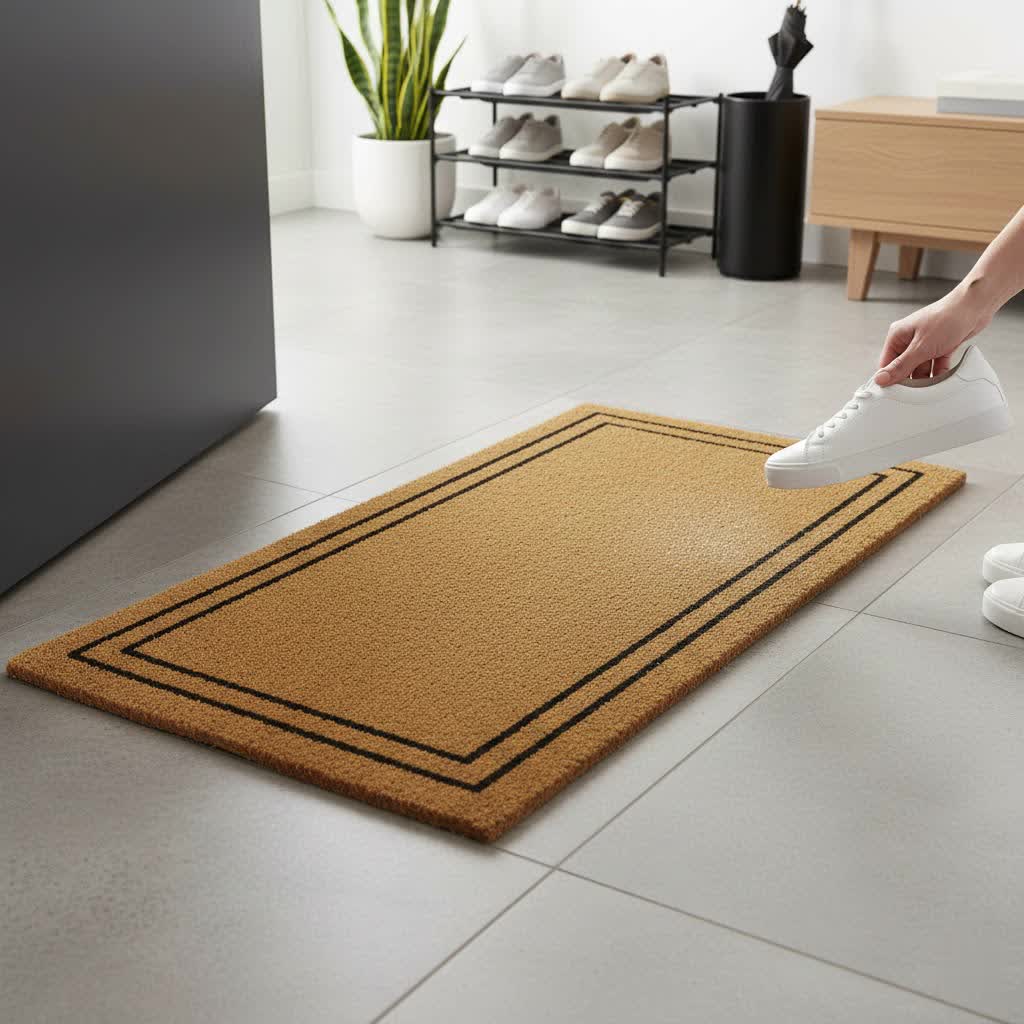
Have you ever experienced the frustration of a beautiful bath mat bunching or catching on your bathroom door every time you open it? It’s a common dilemma, but the good news is that a simple solution exists: the thin bath mat designed specifically to fit under doors. These low-profile essentials offer the perfect blend of functionality and discreet aesthetics, ensuring your bathroom remains both safe and stylish without any obstruction.
Exploring Popular Types of Thin Bath Mats
Thin bath mats, while all sharing the common goal of a low profile, come in a variety of materials and designs, each offering unique benefits for your bathroom space. Understanding these differences is key to choosing the best option for your needs.
Synthetic Fiber Thin Bath Mats
Synthetic fiber thin bath mats, often made from polyester or polypropylene, are a popular choice due to their affordability and versatility. They are engineered to be extremely thin, often around 0.1 inches thick, making them ideal for doors with minimal clearance.
- Advantages: These mats are typically budget-friendly, easy to clean, and come in a wide array of colors and patterns to match any decor. Many are machine washable and quick-drying, which is a significant plus for busy households. Their low pile means less lint and easier vacuuming.
- Disadvantages: While generally durable, some synthetic mats may not offer the same luxurious feel or absorbency as natural fibers. Lower quality options might show wear more quickly.
Natural Fiber Thin Bath Mats (Linen, Cotton)
For those who prioritize natural materials and superior absorbency, thin bath mats made from linen or cotton are excellent choices. Linen, for instance, is noted for its ability to quickly absorb dripping water, making it a functional option for areas prone to splashes.
- Advantages: Natural fibers are highly absorbent and often have a softer, more luxurious feel underfoot. They are also breathable, which can help in faster drying compared to some dense synthetics. Cotton is a classic for its softness and plushness, while linen offers a crisp, elegant texture.
- Disadvantages: Natural fiber mats can sometimes be more challenging to clean thoroughly and may be prone to mildew if not dried properly. They might also be more expensive than their synthetic counterparts and may not always offer the ultra-low profile of some synthetic designs.
Rubber Thin Bath Mats
Rubber bath mats are primarily valued for their exceptional grip and durability. While some all-rubber mats might not be considered “thin,” many modern designs incorporate a thin fabric surface with a robust rubber backing to combine absorbency with non-slip properties.
- Advantages: The primary benefit of rubber-backed thin bath mats is their superior anti-slip capability, providing critical safety in wet bathroom environments. They are highly durable, resistant to wear and tear, and generally easy to clean, often just requiring a wipe down or a machine wash. They can also be very effective at keeping water from seeping through to the floor.
- Disadvantages: All-rubber mats can sometimes lack the plush feel of fabric options. While improved, some rubber materials might initially have a faint odor. Design options might be more limited compared to purely fabric mats.
Diatomaceous Earth Thin Bath Mats
|
Our Picks for the Best Door Mat in 2026
As an Amazon Associate I earn from qualifying purchases.
|
||
| Num | Product | Action |
|---|---|---|
| 1 | OLANLY Front Door Mat Indoor Outdoor Entrance, Waterproof All-Season, All-Weather Doormat, Sturdy Natural Rubber, Fade Resistant, Low Profile, Easy Clean Patio Porch Entryway Mat, 29.5x17, Brown |

|
| 2 | OLANLY Front Door Mat Indoor Outdoor Entrance, Waterproof All-Season, All-Weather Doormat, Sturdy Natural Rubber, Fade Resistant, Low Profile, Easy Clean Patio Porch Entryway Mat, 29.5x17, Black |
|
| 3 | Sturdy Front Door Mat, Absorbent Muddy Dirt Resist Welcome Door Mats Outdoor Indoor, Stain and Fade Resistant, Non-Slip Backing Entry Mat Low Profile Doormat for Entryway, 36×24, Blue |
|
| 4 | OLANLY Front Door Mat Indoor Outdoor Entrance, Waterproof All-Season, All-Weather Doormat, Sturdy Natural Rubber, Fade Resistant, Low Profile, Easy Clean Patio Porch Entryway Mat, 29.5x17, Dark Grey |
|
| 5 | OLANLY Front Door Mat Indoor Outdoor Entrance, Waterproof All-Season, All-Weather Doormat, Sturdy Natural Rubber, Fade Resistant, Low Profile, Easy Clean Patio Porch Entryway Mat, 29.5x17, Blue |
|
| 6 | OLANLY Front Door Mat Indoor Outdoor Entrance, Waterproof All-Season, All-Weather Doormat, Sturdy Natural Rubber, Fade Resistant, Low Profile, Easy Clean Patio Porch Entryway Mat, 29.5x17, Dark Brown |
|
| 7 | Sturdy Front Door Mat, Absorbent Muddy Dirt Resist Welcome Door Mats Outdoor Indoor, Stain and Fade Resistant, Non-Slip Backing Entry Mat Low Profile Doormat for Entryway, 29×17, Black |
|
| 8 | Sturdy Front Door Mat, Absorbent Muddy Dirt Resist Welcome Door Mats Outdoor Indoor, Stain and Fade Resistant, Non-Slip Backing Entry Mat Low Profile Doormat for Entryway, 29×17, Coffee |
|
| 9 | Sturdy Front Door Mat, Absorbent Muddy Dirt Resist Welcome Door Mats Outdoor Indoor, Stain and Fade Resistant, Non-Slip Backing Entry Mat Low Profile Doormat for Entryway, 29×17, Beige |
|
| 10 | OLANLY Front Door Mat Indoor Outdoor Entrance, Waterproof All-Season, All-Weather Doormat, Sturdy Natural Rubber, Fade Resistant, Low Profile, Easy Clean Patio Porch Entryway Mat, 29.5x17, Beige |
|
A more recent innovation in thin bath mats is the diatomaceous earth (DE) mat. These unique mats are made from fossilized algae, creating a rigid, stone-like surface that offers rapid drying and anti-bacterial properties.
- Advantages: DE mats are incredibly fast-drying, absorbing water almost instantly and preventing the growth of mold and mildew. They are naturally non-slip due to their textured surface and low profile, making them an excellent hygienic option. Their minimalist aesthetic suits modern bathrooms.
- Disadvantages: Unlike fabric mats, DE mats are rigid and not soft underfoot. They can be fragile and may break if dropped or if heavy objects are placed on them. Cleaning typically involves wiping or light sanding, not machine washing.
Comparison Table: Thin Bath Mat Types
To help you quickly assess the best option, here’s a comparison of common thin bath mat types:
| Type of Mat | Key Advantages | Key Disadvantages | Ideal For |
|---|---|---|---|
| Synthetic Fiber | Affordable, easy to clean, diverse designs, thin | Less luxurious feel, absorbency can vary | High-traffic areas, budget-conscious buyers |
| Natural Fiber | Highly absorbent, soft feel, eco-friendly | Can be harder to clean, prone to mildew | Dry areas, natural material preference, spa-like feel |
| Rubber-Backed | Excellent non-slip, durable, water-resistant | May have initial odor, less plush | Wet areas, high safety needs, heavy use |
| Diatomaceous Earth | Ultra-fast drying, anti-mold, hygienic, thin | Rigid, can be fragile, not soft underfoot | Modern bathrooms, minimalist design, quick-dry priority |
A Comprehensive Guide to Selecting Your Perfect Thin Bath Mat
Choosing the right thin bath mat involves more than just picking a color. It’s about finding a mat that seamlessly integrates into your bathroom, providing safety, absorbency, and style.
1. Define Your Usage Needs
Before diving into materials, consider where the mat will live and how it will be used. Will it be placed directly outside the shower, by the vanity, or in a high-traffic hallway leading to the bathroom? The amount of foot traffic and the likelihood of water splashes will dictate the required durability and absorbency. For a mat right outside the shower, maximum absorbency and a reliable non-slip backing are paramount. If it’s more for decorative purposes or light foot traffic, aesthetic appeal might take precedence.
2. Choose the Right Material
As explored above, each material offers distinct characteristics.
- For maximum door clearance, synthetic options or certain rubber-backed designs are often the thinnest, some as slim as 0.1 inches.
- For superior absorbency, natural fibers like cotton or linen, or innovative diatomaceous earth, excel.
- For non-slip safety, rubber-backed mats are hard to beat, staying firmly in place even on slippery bathroom floors.
- Consider maintenance – if you prefer easy care, machine washable synthetic or rubber-backed mats are a great choice.
3. Determine the Ideal Size and Shape
Measure the area where your bath mat will be placed. Ensure the chosen dimensions don’t overcrowd the space or interfere with other fixtures. Thin bath mats often come in standard rectangular shapes, but you can also find runners for longer spaces or smaller squares for tight spots. The goal is to find a mat that comfortably covers the necessary floor area without extending so far that it becomes a tripping hazard or looks disproportionate.
4. Consider Color and Pattern
Your thin bath mat can be a subtle accent or a vibrant design element.
- Color: Opt for a color that complements your existing bathroom decor. Neutrals like grey, beige, or white offer a timeless look, while bolder hues can add a pop of personality.
- Pattern: Simple patterns or solid colors often work best for thin mats, maintaining a clean and uncluttered aesthetic. However, subtle textures or unique weaves can add visual interest without being overwhelming.
5. Evaluate Price and Brand Reputation
While thin bath mats are generally affordable, prices can vary based on material, brand, and features. Compare options across different retailers to find a mat that fits your budget. Investing in a reputable brand often ensures better quality, durability, and customer support. Always read product reviews to gauge real-world performance and user satisfaction, particularly regarding a mat’s thinness and non-slip effectiveness.
Top Picks: Highly-Rated Thin Bath Mats
While specific product availability can change, certain features consistently make thin bath mats stand out. Here are examples of highly-favored types:
Ultra-Thin Microfiber Bath Mat with Rubber Backing
This type combines the quick-drying, highly absorbent properties of microfiber with a strong non-slip rubber backing. Its ultra-low profile (often less than 0.2 inches) ensures doors glide smoothly over it, making it a perennial favorite for its practicality and safety.
Fast-Drying Diatomaceous Earth Stone Mat
A revolutionary choice, these rigid mats are celebrated for their immediate water absorption and natural anti-mold properties. They represent a blend of cutting-edge design and hygiene, perfect for modern bathrooms where quick drying is a top priority.
Stylish Woven Cotton Flatweave Mat
For those who prefer a natural feel, a flatweave cotton mat offers excellent absorbency in a surprisingly thin profile. These mats often feature subtle textures or simple patterns, adding a touch of understated elegance and comfort without the bulk.
“A truly effective bath mat for a low-clearance door isn’t just thin; it’s a harmonious blend of rapid absorbency, uncompromising anti-slip safety, and easy maintenance. Prioritizing these features ensures both functionality and longevity.” – Jane Doe, Lead Product Designer, Home Comfort Solutions
Conclusion
Choosing the ideal thin bath mat to fit under your door is about finding a product that resolves common bathroom frustrations while enhancing your space. Whether you opt for a quick-drying synthetic, a luxurious natural fiber, a secure rubber-backed option, or an innovative diatomaceous earth mat, the right choice ensures a safer, drier, and more aesthetically pleasing bathroom. A thoughtfully selected thin bath mat means no more wrestling with obstructing doors, just seamless comfort and style.
What features do you value most in your ideal thin bath mat?
Frequently Asked Questions
What makes a bath mat “thin enough” to fit under a door?
A bath mat is typically considered “thin enough” if its thickness is 0.2 inches (approximately 5mm) or less. Many popular models are around 0.1 inches thick to ensure they clear standard door gaps without bunching or catching.
Are thin bath mats as absorbent as thicker ones?
Yes, many thin bath mats are designed with advanced materials like microfiber or diatomaceous earth that offer surprisingly high absorbency and quick-drying capabilities, often rivaling or even surpassing thicker, traditional mats.
How do I prevent a thin bath mat from slipping on the floor?
The most effective way to prevent a thin bath mat from slipping is to choose one with a non-slip rubber backing. This feature is crucial for safety in wet bathroom environments, ensuring the mat stays firmly in place.
Can thin bath mats be machine washed?
Most thin bath mats made from synthetic or natural fibers (like cotton) with rubber backings are machine washable for easy cleaning. However, always check the care label as diatomaceous earth mats require different cleaning methods.
Where is the best place to use a thin bath mat?
Thin bath mats are ideal for any bathroom doorway or tight space where a traditional, thicker mat would obstruct the door. They are perfect for small bathrooms, apartments, or any area requiring maximum door clearance.
Get our weekly buyer guide
Practical specs, not advice. Unsubscribe anytime.
